
To gain insight into Japanese design, we can explore a common and beloved item: the bento box.
The bento box has a rich history and can be found in various cultures. It serves as a way for chefs to express implicitly and reflects values such as reverence for nature and spirituality. The bento box is more than just a container–it is a symbol, a ritual and a part of Japanese heritage.
Despite its long history, bento boxes have been passed down through generations and have resisted the global fast-food culture. They are crafted to meet consumer needs and have evolved over time to offer both classic and contemporary options.
Japanese people continue to value bento boxes as a convenient and personalised way to enjoy meals on the go or at work. This cultural tradition has even inspired neighbouring countries like the Philippines, Korea, Taiwan, and India to develop their own versions of lunchboxes, preserving and reimagining traditional dining practices for everyday use.

The History of Bento
Late Kamakura Period (鐮倉時期, 1185-1333)
Before Bentos, people used to make dried rice balls and wrap them with a cloth called “furoshiki” (風呂敷) for work or long trips.
Azuchi-Momoyama Period (安土桃山時期, 1568-1600)
Bento boxes were originally created for picnics like cherry blossom viewing and tea parties. They are usually beautifully decorated and single-tiered.
Edo Period (江戶時期, 1603-1868)
Kabuki (能劇 Noh theatre) and Bunraku (文樂 puppetry) were popular entertainment during the peaceful Edo period. Audiences had the chance to meet the actors during intermission, leading some to bring special Bentos filled with fine food as gifts to their favourite performers. This tradition turned intermission into a sophisticated social gathering time. Later, the luxurious, abundant “makunouchi bento” (幕內便當 makunouchi means intermission) became a tactic for theatres to draw in audiences, and it played a role in shaping banquet-style bento that is still used for formal occasions today.
The literary “柳庭記” from the same era also revealed the origin of the word bento: “備便而充當其用 (prepare convenience and fill when its use)”, referring to something that makes distribution easy during warfare, demonstrating bento’s oldest use.
Meiji Period (明治時期, 1868-1972)
The Emperor initiated a major restoration to embrace knowledge from the West, leading to industrialisation and the advancement of transportation and railway systems. This allowed people to work in distant locations. Passengers would buy “ekiben bento” (駅便當 station bento) at the station to enjoy while travelling. Ekiben bento continues to be important in showcasing local foods and agricultural products through bento boxes today.

By Photocapy – The advantages of rail travel, CC BY-SA 2.0. Credit Taisho Period (大正時期, 1912-1916)
With the industrialisation of Japan, there was a growing demand for metals for industrial and military uses. Aluminium bento boxes became available in the market, although expensive but easy to clean. Unfortunately, following World War 1, food shortages made it difficult for many people to afford aluminium bento boxes, leading to some social disparities.
The Modern Age
With the rise of microwaves and convenience stores, the fast-food culture grew exponentially. Bento boxes, once made of wood or metal, were commonly made of plastic for easier carrying. Recently, the Japanese have become more environmentally conscious, using recyclable tableware in schools and offices to help minimise pollution.
What’s Inside the Bento?
Materials
Bento boxes can be made from a variety of materials. Lacquered wood is the most expensive for traditional bento boxes, followed by oak, magnolia, bamboo leaves, pine, and plum. Pine, bamboo, and plum are known as the “lucky triad” of Japanese art, symbolising peace.
In the past, aluminium and stainless steel bento boxes were popular as status symbols during Japan’s industrialisation. However, today’s generation is more mindful of the social and environmental impacts of their choices, preferring recyclable materials over disposable ones.
Contents
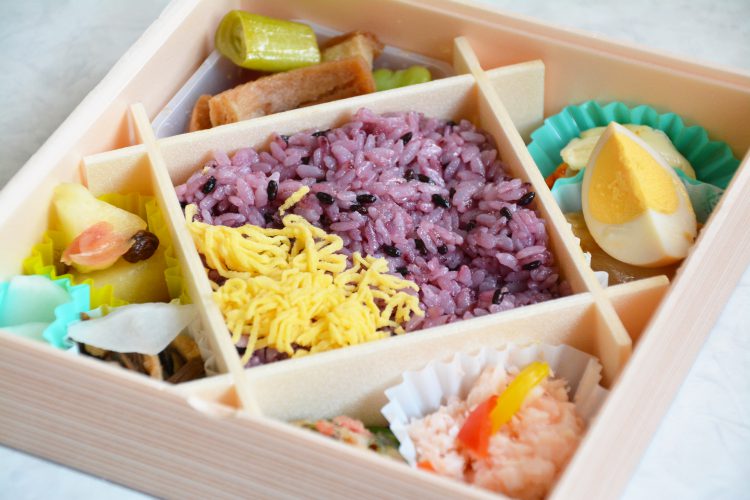
The earliest bentos were simple, typically consisting of rice or rice balls with a red fruit centre to represent the Japanese national flag. The classic makunouchi bento usually includes rice, a few ume fruits, a piece of salmon, and sliced rolled eggs. As Japan began to embrace influences from other cultures, bento started to incorporate small portions of Western dishes like pasta and hamburgers. During cherry blossom season, it’s common for people to share bento boxes with food shaped or coloured like cherry blossoms with loved ones.
Bento culture has a long history, but the contents of the boxes are always changing to reflect the nature, seasons and special occasions. The focus is on using natural ingredients and avoiding any artificial elements. The representation of the food in small, bite-sized portions allows for convenient and elegant eating with no trace or mess. This attention to detail and the connection to nature is a hallmark of Japanese culture.
Structure
Bento boxes are typically divided into compartments, much like traditional Japanese crafts, with a box layout. This design promotes orderly eating habits and showcases Japanese culture’s emphasis on structure, presentation and order. While the appearance of the bento box remains consistent, the variety of food inside can be adjusted to maximise space and enjoyment. Modern bento boxes may even include additional items like plates, saucers, cups, pitchers and chopsticks, making them both practical and enjoyable to use.
Philosophy Hidden in the Bento Box
Making it so delicious-looking you could eat it with your eyes.
Japan Forum Newsletter
In Japanese culinary philosophy, the focus is on both aesthetics and flavour. Chef aims to create dishes that are not only delicious, but also visually appealing by incorporating the five colours – white, black, yellow, red and green, as well as the five flavours – sweet, sour, bitter, spicy and salty. It is important to balance these colours and flavours to create a sense of harmony and avoid overwhelming the dish with too much going on. This attention to detail creates a sense of tranquillity in the bento box, often leaving people impressed and hesitant to dig in.
Bento boxes typically include simple and affordable ingredients like tofu, eggs, vegetables, rice, dried fruits and raw fish. These components are small but pack a powerful punch, staying true to the Japanese design philosophy of “small yet mighty”.
Japanese style is known for its natural beauty, simplicity and harmony. It draws attention from nature, the seasons and Zen philosophy.
The Japanese have a rich history of living on a small island for generations. Due to limited communication with Westerners, they developed unique methods of learning by closely observing the surroundings, relying on their senses and paying close attention to details. Bento is a wonderful example of this.
A lunch box may not seem like anything extraordinary to some, but for the Japanese, bento carries a special significance. It is the way to showcase the beauty of food within a seasonal context and serves as a form of communication. In the past, bentos were given as gifts to favourite celebrities or to those who were unwell. Nowadays, parents create adorable cartoon bentos for their kids, and many young couples continue to express their love through this tradition. Despite its modern adaptations, the essence and meaning of bento remain unchanged. As we enter a new century, bento culture continues to evolve and adapt to the times.
References
Kenji Ekuan (1998). The Aesthetics Of The Japanese Lunchbox. London: The MIT Press.
李佩玲 (2002). 和風浮世繪 日本設計的文化性格. 台北: 田園文化.
Ngoc (2007). History of Bento. http://www.cookingcute.com/history_of_bento.htm
Eva Lucks (2001). Eating Our Way Through Japanese History — A Brief Study of the Obento. Retrieved from Washington University in St. Louis, Arts and Science website: http://artsci.wustl.edu/~copeland/obento.html

Leave a Reply